
Under Destruction or Under Construction?: Youth at the 2026 Munich Security Conference
The Munich Security Conference, founded in 1963, has grown into one of the world’s most influential forums on foreign and security policy. Every year, heads of state, foreign and defense ministers, military leaders, CEOs, and policy experts gather at the Bayerischer Hof Hotel to discuss “the state of the world.” Over the years, it has become a kind of thermometer for global order: what alliances matter, which conflicts dominate, and how power is shifting globally.
Dominik Juling
2/20/20262 min read
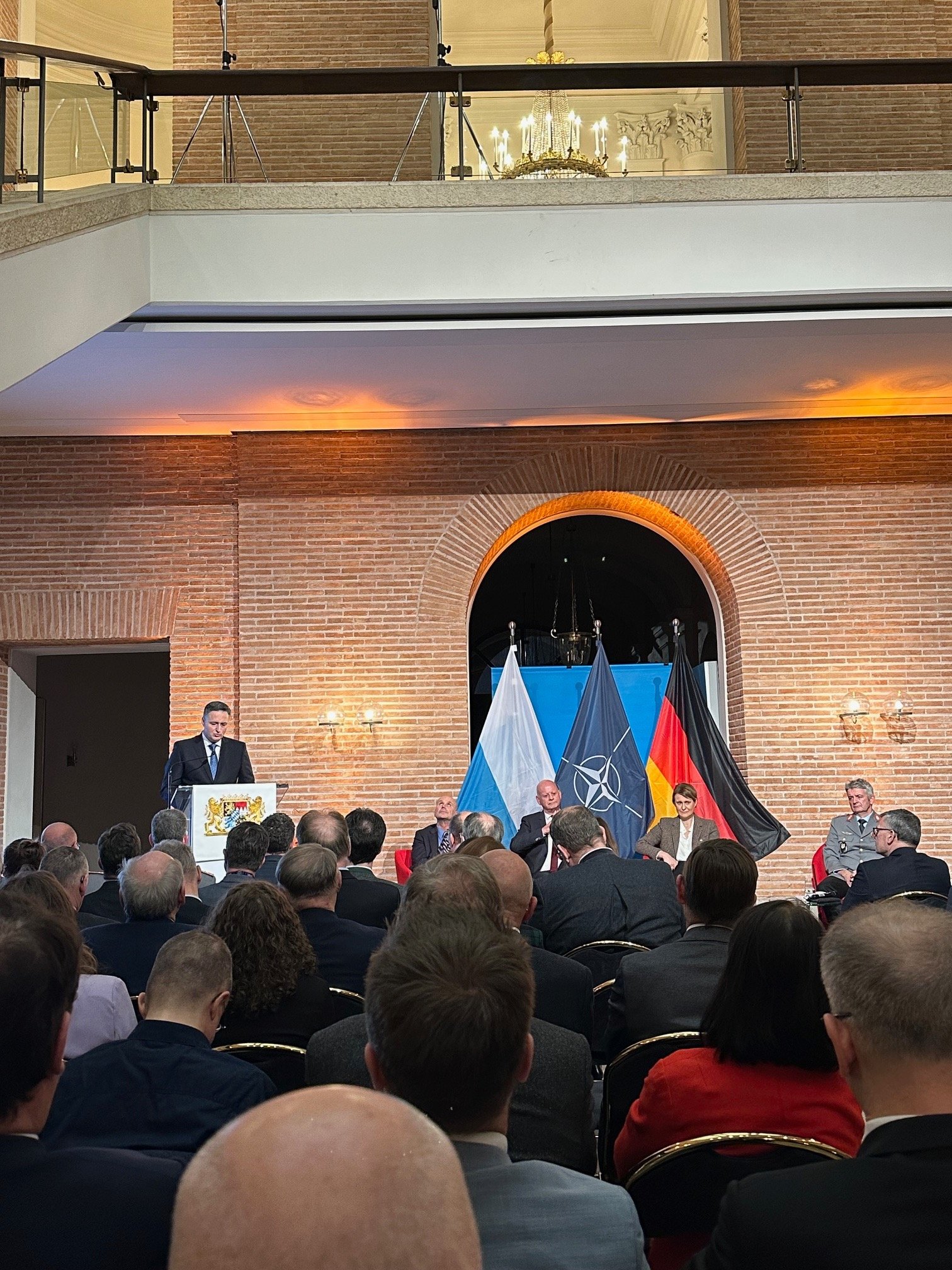
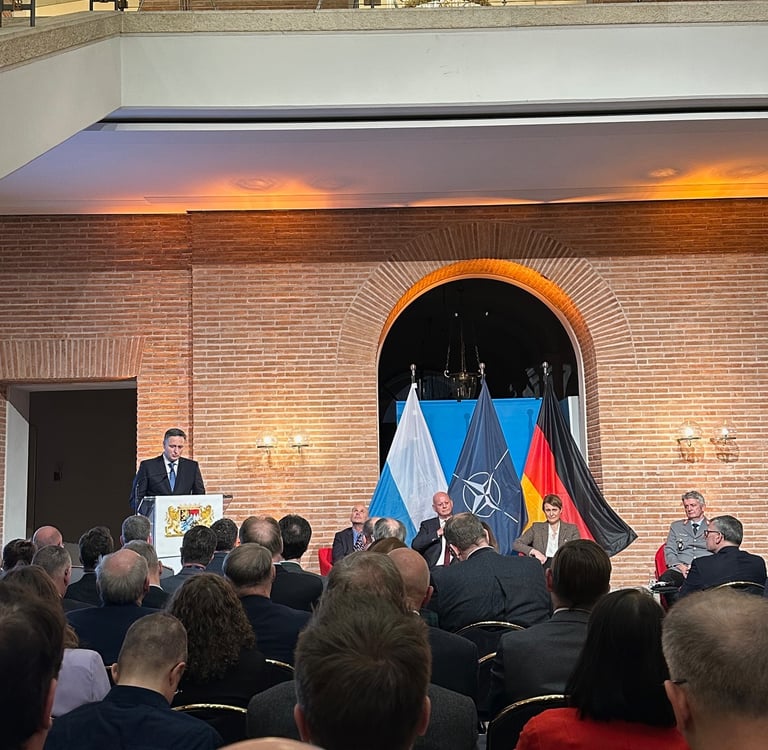
This February, I found myself in Munich during the 2026 Munich Security Conference (MSC) — not inside the famous main hall with presidents and ministers, but on the sidelines, at side events, receptions, and public panels. That is as far as most interested and motivated young people can get.
The Munich Security Conference, founded in 1963, has grown into one of the world’s most influential forums on foreign and security policy. Every year, heads of state, foreign and defense ministers, military leaders, CEOs, and policy experts gather at the Bayerischer Hof Hotel to discuss “the state of the world.” Over the years, it has become a kind of thermometer for global order: what alliances matter, which conflicts dominate, and how power is shifting globally.
But access has become increasingly restricted. If you’re not a government official, journalist, or part of the defense industry, getting into the core conference is difficult. There is a youth program and a handful of initiatives to include young voices — and these are valuable. Still, compared to the one thousand decision-makers present, youth representation remains very limited.
Though this year’s motto, “Under Destruction,” hit a nerve. Many panels agreed that the old world order is not coming back. The unipolar moment of U.S. dominance is over. International organizations like the United Nations are struggling for influence. Globalization is slowing, protectionism is rising, militarization is back, and alliances are being reconfigured — from new partnerships between India and Europe to deeper ties between the EU and South American countries. Europe itself, including Germany as the host of the MSC, is still searching for its place in a world that feels fundamentally unstable.
Yes, there is a war in Europe. Yes, geopolitical tensions are high. But for many young people around the world, security is more than tanks and troop numbers. For many, security also means climate stability, functioning education systems, decent job opportunities, social protection, and the ability to participate politically. These topics were present, but often secondary.
And yet, hope flickered in some discussions. A few speakers — including younger political figures like Alexandria Ocasio-Cortez — articulated alternative visions: clearer global rules, renewed international cooperation, and fairer exchange rather than isolation. It was a reminder that “under destruction” does not have to mean permanent collapse. It can also mean transition.
Outside the conference hotel, thousands — many of them young — marched through Munich in protest. Their concerns ranged from the possible reinstatement of mandatory military service in Germany to broader critiques of global priorities and solidarity with movements from Kurdistan to Iran. They, too, have visions of security and world order. They just weren’t in the main negotiation rooms.
What struck me most was not only youth frustration, but also a sense that even senior leaders are disoriented. There is no clear master plan for what the new world order should look like. Governments are reacting as much as they are shaping.
And that is precisely why youth must be more present — not symbolically, but structurally. The decisions discussed behind closed doors in Munich will shape the next decades far more for today’s young generation than for those already at the peak of their careers.
If the world is “under destruction,” then it is also under construction. The question is: who gets to design the blueprint?
Revolutionising Youth Media