The Fit Check Era of Global Power: Aesthetic Governance in the Age of Virality
When Macron stepped onto the stage at Davos in House of Jullien, the aviators went viral - the brand’s website crashed, and capitalism did what it does best: converted symbolism into sales and consumerism. A speech can be forgotten. A silhouette can’t.
Saara Sharma
1/23/20261 min read
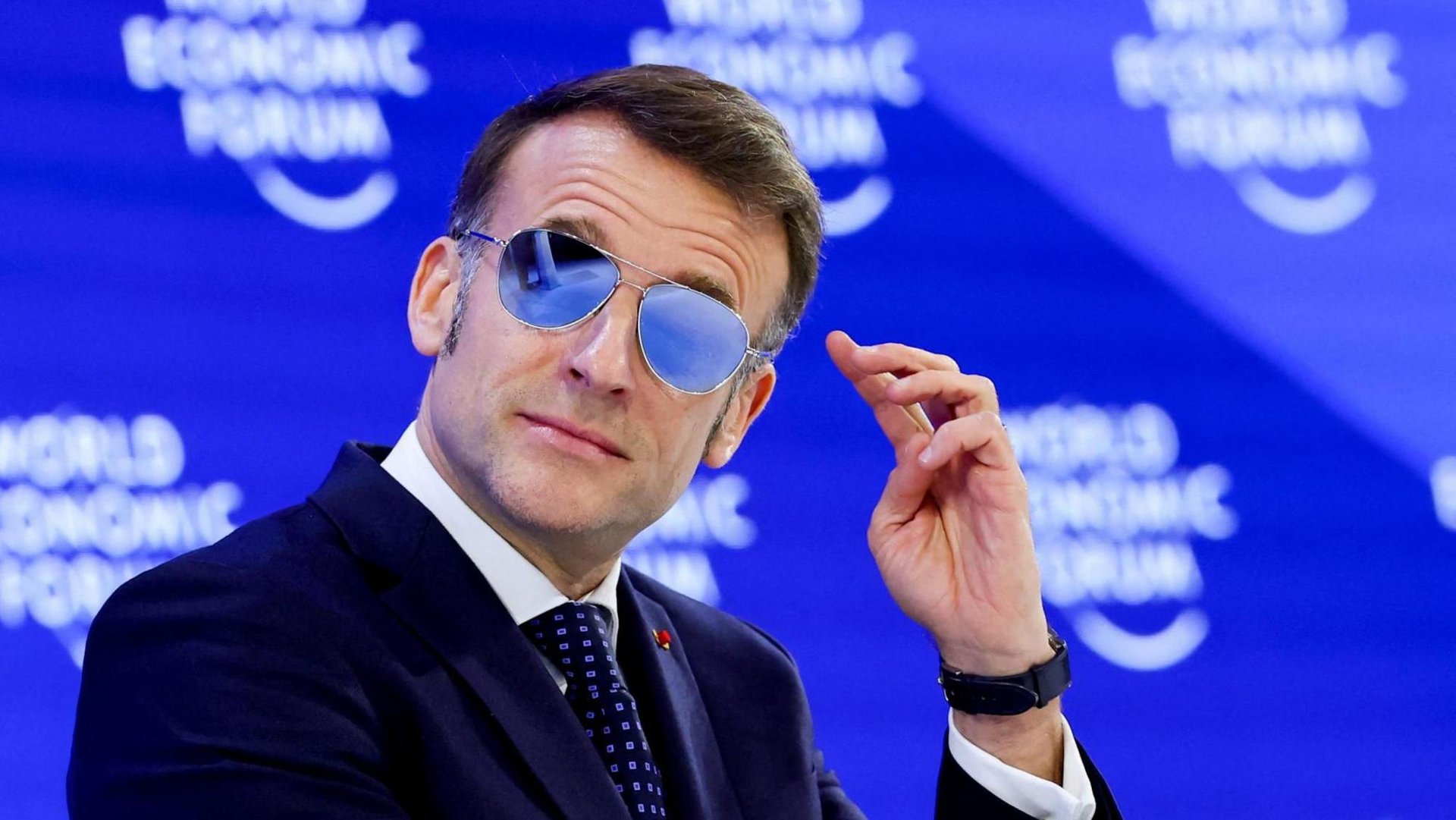
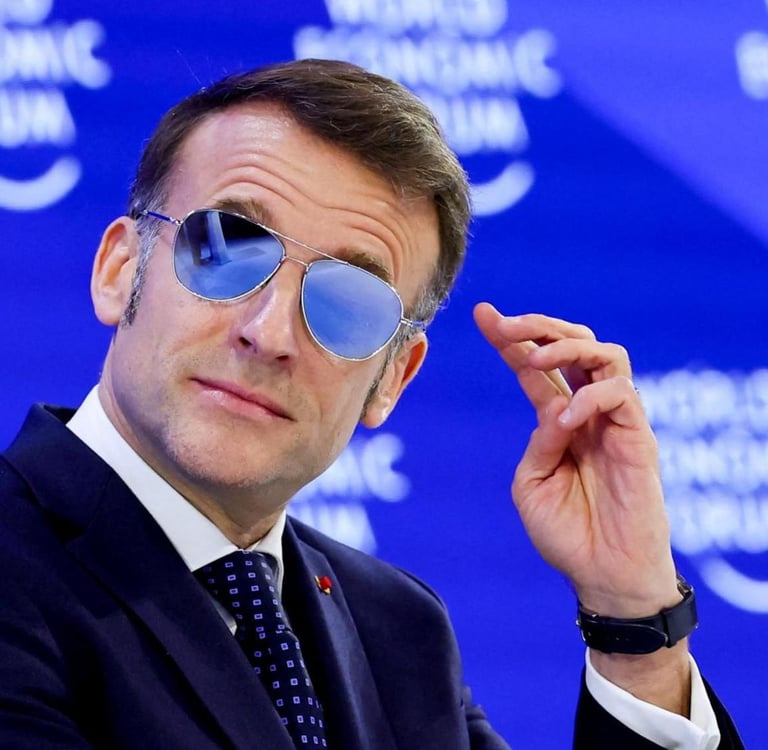
In a world where attention is the rarest commodity, fashion is the most effective delivery system of soft power. For the Gen Z, politics is also about posture. It has to be legible, scrollable, and look très chic. When Macron stepped onto the stage at Davos in House of Jullien, the aviators went viral - the brand’s website crashed, and capitalism did what it does best: converted symbolism into sales and consumerism. A speech can be forgotten. A silhouette can’t.
At a deeper level, geopolitics and economics now move together, bound by image and attention. Visual symbols simplify power, turning complex alignments into signals that can be quickly read and widely shared. In this era, leaders operate less in assemblies than in algorithmic spaces, where virality shapes markets, brands, and national image. In moments of crisis—wars, sanctions, standoffs—this cycle intensifies. Uncertainty fuels consumption, prestige goods steady narratives, and culture is monetised faster than policy can take effect. Even limited conflicts, then, become engines of late capitalism.
History, of course, has always dressed power. Subhash Chandra Bose’s cap, Jawaharlal Nehru’s rose, Winston Churchill’s cigar, Nelson Mandela’s madiba shirts, Margaret Thatcher’s handbag, Volodymyr Zelenskyy’s olive-green tees: each a thesis statement without footnotes.
What’s new is the speed. Gen Z doesn’t wait for historians; they decide in real time. A pair of sunglasses can now do what white papers cannot: make power feel current. In today’s world, the future of politics may not just be written, but it definitely is worn.
Revolutionizing Youth Media.